
Until the 1950s, Komodo Island was unknown and remote to the public. Only scientists who have taken a special interest in the rare species were aware of it. Indeed, it was J.K.H. van Steyn van Hensbroek, a Dutch colonial official, who first reported his sightings of the animal to the scientific world. The discovery occurred in 1910.
Two years later, Dr Peter Ouwens described the species as Varanus komodoensis. At that time, he was the director of the Zoological Museum in Bogor. Komodo Island and its nearby Rinca Island became the main focus of the Indonesian government in 1965. The officials declared the islands as a nature reserve to protect the dragon species.
In 1980, it built Komodo National Park to add its protection measures for the species and their natural habitat. Its global popularity started to emerge after it received recognition from UNESCO as a world heritage site. Since then, the destination has attracted local and global tourists for wildlife and nature adventures.
Are tourists allowed on Komodo Island?
Yes, tourists are allowed, but with restrictions. The policies are part of the efforts from the local authorities to protect the endangered Komodo dragons and their habitats. If you want to see the dragons, please come with a ranger. Don’t forget to follow all the rules. By nature, the dragons are wild predators.
Although attacks on humans are rare, you must stay alert while on the island. Failing to meet the rules may result in some serious risks. Here are some of the policies:
- Only walk on marked trails and avoid wandering off trails.
- Since no hotels are available on Komodo Island, choose liveaboard boats for overnight stays.
- Don’t touch or feed the dragons because these acts are illegal and very dangerous.
- Maintain a safe distance of between 5 and 10 metres from the dragons.
- Do not bring items, such as plastic bags, food scraps, or items with strong smells.
- Keep quiet; don’t shout or make sudden movements while near the species.
Five main attractions of Komodo Island
Most tourists come to this island for three main reasons: natural, scientific, and cultural. The unique landscape of the island owes to rare ecosystems, geological history, and evolutionary isolation. The ecosystems in the site are complete, consisting of savannahs, tropical forests, and mangroves. Komodo Island has a long history.
It is actually part of the Lesser Sunda Islands, which were isolated during the Ice Age or around 2.6 million years ago. Thanks to the isolation, the Komodo dragons could evolve uniquely because they didn’t have to compete with other big predators. See the full list of the islands in particular, or the Komodo National Park, below!
Prehistoric Komodo dragons
The biggest unique attraction of Komodo Island is the species themselves. The island is the only natural habitat for the world’s largest living lizard. The species is unique, as it can grow up to 3 metres long and weigh over 70 kg. Having a chance to see the dragons is a lifetime experience. The fact is that because of its rare populations, which are just around 3,000 to 5,000 individuals as of today.
Beautiful nature
As said above, Komodo Island has savannahs, tropical forests, and mangroves. All of these make the site such a complete area to explore and enjoy. You can hike, trek, or simply admire the dry and open grasslands on the island. Don’t forget to take plenty of amazing nature documentaries there.
Stunning beaches and coastal spots
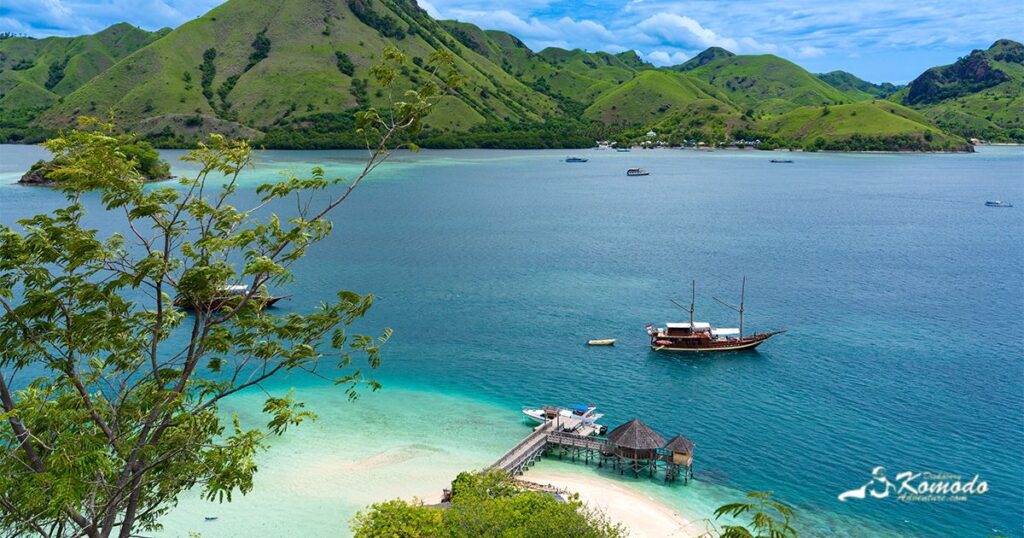
One of the most popular beaches around Komodo Island is Pink Beach. This spot is special because it’s one of the few beaches in the world with pink sand. The colour comes from crushed red coral and the white sand. Of course, you can visit other beaches with clear turquoise waters by joining boat tours.
Wildlife adventure
Besides the Komodo dragons, there are plenty of animals, which are recommended for those who love wildlife tourism. You can have both land and sea adventures. The land animals include deer, wild boar, and water buffalo. For the sea, you can meet manta rays, sea turtles, reef sharks, and a lot of tropical fish species.
Water-based sports
Komodo Island is one of the best spots for doing several water sports. You can dive, snorkel, do sea kayaking and paddleboarding, and join island-hopping tours. See the exact locations below:
- Diving and snorkelling: Manta Point, Batu Bolong and Castle Rock.
- Sea kayaking and paddleboarding: Around Komodo, Rinca, and Padar Islands.
- Island hopping: Komodo, Rinca, Padar, Kelor, Kanawa, and Sebayur Islands and Pink Beach.
How do I go from Bali to Komodo Island?
You can first fly to Labuan Bajo and then take a boat to Komodo Island. The flight usually takes around 1.5 hours. You will depart from Ngurah Rai International Airport in Bali and then arrive at Komodo Airport in Labuan Bajo, Flores. Some local airlines are available, such as Garuda Indonesia, Lion Air, Batik Air, and Citilink.
After arriving in Labuan Bajo, taking boat trips is recommended. Some options are available, such as speedboat, liveaboard boat, and private boat. Most tourists choose the speedboat tour or day tour, which usually lasts between 1 and 2 hours. The trip already includes trekking to see the dragons, snorkelling, and visiting the Pink Beach.
Best time to visit Komodo Island
The dry season is the ideal time to visit the island. Usually, the season runs from April to December. With the favourable weather, you can do trekking, snorkelling, and observe rare animals in the Komodo National Park. In this regard, it’s easier to trek on hills and savannahs. With low rainfall, the skies are mostly clear for taking beautiful pictures, too.
Moreover, the seas are calm, which is perfect for diving, snorkelling, and taking boat trips. The dry season also increases your chances of seeing the dragons on Komodo Island. They will usually be more eager to come out to hunt or bask. Bear in mind, they are more active during the morning and late afternoon. Thus, come during these times for greater chances to see them.
Is Komodo Island part of Bali?
No, it’s not part of Bali. It is part of the East Nusa Tenggara Province. Its exact location is near Flores Island, which is also one of the areas in the province. Bali itself is a separate province. It makes so much sense if a lot of people think Komodo Island is in Bali.
The opinion may relate to the fact that a lot of tourists depart from Bali to arrive in Labuan Bajo. The island sits between the Flores and Sumbawa Islands. Furthermore, it lies between the Flores Sea to the north and the Indian Ocean to the south. This location makes the island close to the meeting point of major ocean currents.
As a result, the island has rich marine biodiversity. Labuan Bajo on Flores Island is the nearest and main access point to Komodo Island. It is around 40 km east of the island. Tourists usually stay in the town because the island has no human population. In Labuan Bajo, they can eat, drink, and mingle with the locals and other tourists during the holiday.
Entry requirements for the Komodo National Park
The Komodo National Park is a very large and rich biodiversity area. Besides Komodo Island, it consists of other islands, such as Rinca, Padar, Kelor, Kanawa, Sebayur, and Gili Lawa. It also manages and observes the Coral Triangle, which is one of the world’s richest marine biodiversity zones.
These zones are home to over 1,000 fish species, 260 coral species, and 70 coral species. Visiting the park means you are about to enjoy abundant tourist attractions in one place. This is something you may not find in other places in the world. To enter this area, you need to pay attention to these rules:
Paying the entrance tickets
You must pay entrance fees to get inside Komodo Island. The price for each ticket for every adult foreign visitor is between US$10 and 20 per island. The ticket already covers ranger services for guided trekking. For every local guest, the ticket is lower at around US$3 during weekdays and about US$5 for weekends.
Visiting with licensed rangers
To reiterate, you can’t explore Komodo Island on your own. This activity could be very dangerous. You need to visit with official rangers to ensure your safety. This policy also aims to protect the environment. The rangers have extensive knowledge of the dragons. Thus, they can inform you on what you should do if the dragons approach your point of standing.
Getting extra permits for certain activities
You need to arrange special permits if you visit the atoll for scientific or business-related purposes. For example, if you want to use a drone, you need to first get a permit from the park authorities. The same policy goes for doing scientific research. For filming or commercial photography, you need to first get approval from the officers of the park.
Following health policies
If you arrive at Komodo Island from overseas, make sure you get travel vaccines, such as hepatitis A/B and tetanus. Overall, no special vaccinations are required. Don’t forget to bring insect repellent because dengue is present on the island. Bring along water and sunscreen to further protect your body. Having sufficient trekking gear is also recommended.
Can I stay on Komodo Island?
No, you can’t stay overnight on the island. The Indonesian government disallows any businessman from building hotels, resorts or guesthouses. The policy aims to protect the conservation area. Too many human beings may disrupt the habitat of the dragons and the whole ecosystem. Another reason relates to security.
As mentioned above, the dragons are dangerous predators, especially at night. Hence, if humans live side by side with the species, greater risks of attacks may occur. So, how can you stay instead if you want to spend a longer time on Komodo Island? These are the options:
- Liveaboard boats: You will sleep on a boat that stays near the island. This tour includes meals, guides, trekking and island hopping.
- Staying in Labuan Bajo: The nearest place to stay is Labuan Bajo, which offers diverse accommodation types, from five-star hotels to budget stays.
Plan your trip to Komodo Island with Discovery Komodo Adventure!
Interested in seeing rare Komodo dragons at least once in your lifetime? Or are you curious about the water-based sports on beaches along Komodo Island? The Discovery Komodo Adventure is ready to adjust to your needs! We have extensive experience in handling various needs from our clients, both individuals and groups.
We are here to ensure your vacation is free from stress. Let us handle your itinerary, entrance fee to the park, and of course, guided tours to see the dragons. Your safety and happiness are our top priority. So, what are you waiting for? Directly choose our packages or chat with us if you still have any questions!
